Posts

Showing posts with the label multistage heat recovery

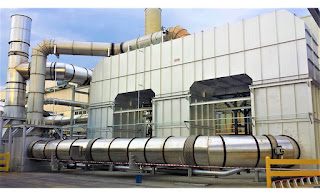
55 Gallon Drum Line Equipped with Wash lines, Ovens, Recuperative Thermal Oxidizer and Heat Recovery Methods

Image
The Challenge A global German company, wanted to have a presence in the United States to manufacture 55 Gallon Drums . The new facility in the US needed to not only comply with EPA’s regulatory standards, but also provide increased processing speeds and fuel efficiency. The Solution Epcon’s capacities of designing, engineering and manufacturing of specialty and finishing equipment is unparralled. Our team custom engineered and selected thethe following systems in all Stainless Steel – including all Stainless Steel conveyors, assembly parts components, including the vertical pumps. All stages heated to a temperature of 180 °F for chemical cleaning. Two (2) 3-stage Washlines for deoiling and phosphatising the steel before painting Multiple 2 lane and 4 lane exterior Bake Ovens Double and Single Lining Ovens Multiple Batch Ovens Lid Lining and Curing Ovens Multistage Heat Recovery One Single Oxidizer, 40 000 SCFM Capacity Recu...
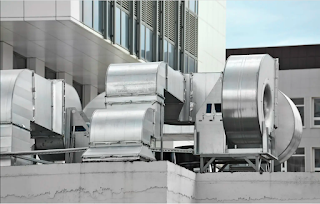
Industrial Equipment for Air Conditioning and Heating Manufacturing

Image
Epcon’s collaboration with industry leading Air Conditioning Evaporator and Condenser manufacturers is a perfect example of how Epcon’s attention to customers’ needs results in innovative and cost effective environmentally friendly solutions. When the   HVAC industry   was faced with the challenge of eliminating hazardous solvent based degreasing materials from their processes, Epcon worked closely with industry leaders, to develop an innovative and then patented   Thermal Deoiling   System. Not only did the system achieve the desired degreasing/deoiling and cleaning performance but, at a significant net operating cost savings. Epcon holds two patents:  Thermal Deoiling and Thermal Degreasing. As the first-choice equipment supplier to the Industry,we engineer integrated systems, incorporating  heat recovery  methods and thermal recycling, ensuring your process is optimized for efficiencies. With hundreds of units in the field around the world, Epcon no...

Epcon Industrial Systems Receives Order for Thermal Deoiler

Image
Thermal Deoiling is essential to have absolutely clean fins, used in radiators, condensers, evaporators, or anything that goes through the brazing operation. Over the years, Epcon Industrial Systems , Conroe, Texas, has supplied dozens of systems for this application and holds two patents on Thermal Deoilers . Recently, Epcon received an order from one of the original customers, to duplicate a previously supplied system, now enhanced with our new patented engineering technology. For more information, Visit https://epconlp.com See the featured article on https://www.modernmetals.com/item/15840-epcon-industrial-systems-receives-order-for-thermal-deoiler.html

Epcon Designs & Builds Large Capacity Recuperative Thermal Oxidizer

Image
Epcon , Conroe, Texas, designed and built this large capacity Recuperative Thermal Oxidizer for a 55-gallon steel drum manufacturing operation. This system consists of Recuperative Oxidizer with primary and secondary heat recovery and stainless-steel insulated ductwork to and from various ovens and sources of emissions. The entire system was built, shipped in components, installed, and commissioned by Epcon personnel. This is another feather in Epcon’s hat for a repeat customer. For more information, Visit https://epconlp.com See the featured article on https://www.modernmetals.com/item/15997-epcon-designs-and-builds-large-capacity-recuperative-thermal-oxidizer.html  

Thermal Curing: A Cornerstone of Composite Bonding and the Challenges of VOC Emissions

Image
Thermal curing, the process of hardening adhesives and sealants using heat, is a ubiquitous technique in numerous industrial and product manufacturing processes. In recent years, the composites industry has garnered increasing attention, particularly in the automotive and aerospace sectors. This surge in popularity stems from the desire to reduce vehicle and aircraft weight, thereby minimizing fuel consumption and greenhouse gas emissions. Composite materials , employed in these industries, must possess exceptional tensile strengths and load-bearing capabilities to withstand extreme temperatures and pressures. Three prominent composite bonding methods, each involving adhesive application – secondary bonding, co-bonding, and co- curing with the adhesive – predominantly differ in curing schedules. However, they all rely on heat-cure methods. In all cases, the adhesive composition must be meticulously designed to meet performance requirements under a wide range of conditions. This is why...

A Look Back : Top Industrial Gases & Atmospheres Articles of 2018

Image
Epcon's Article, The Impact of Thermal Oxidizer Sizing on Melt-System Capacity, was one of the most popular features in Industrial Heating Magazine. Below is an overview of the top five high traffic articles from 2018.  To continue a trend we started in 2017, Industrial Heating will highlight a topic on our website and list the most-popular articles under that topic according to page views. We do this for two reasons: first, to showcase some of the outstanding content on www.industrialheating.com ; second, to provide a useful resource for readers who have a particular interest in that topic. As you will see, industrial gases and atmospheres covers a wide range of technologies – from combustion to endothermic generators to thermal oxidizers. Here is a list of the five most-viewed IGA articles on our website in 2018. Combustion Technologies Improve Melting-Furnace Productivity This article from June 2018 was clearly the most popular in this topic on our website last year. Provid...

Methods to Increase Paint and Coating Application Process Efficiencies

Image
The industrial painting and coating of surfaces typically involves stages of heat treatment along with significant VOC emissions, which make the process well suited for an integrated “ oven /oxidizer combination” design with multi-stage heat recovery. By utilizing heat exchangers to transfer heat, it is possible to recover and recycle most of the thermal energy that would otherwise be wasted in the process, and potentially save millions in annual operating costs. A primary heat exchanger is used to pre-heat the process gas as it enters the air pollution control unit. These are typically in the form of regenerative and recuperative thermal oxidizers. From there, a secondary and even tertiary heat exchange system can be utilized to further recycle thermal energy. Within industrial paint and coating applications, the inclusion of multi-stage heat recovery between the ovens and oxidation process not only ensures emission compliance, but enhances thermal efficiency and overall system pe...

Best Practices in Aluminum Scrap Recycling Systems

Image
Understanding and applying best practices in aluminum scrap recycling systems is key to realizing the full potential of your recovery system. Recognizing that a 1% deviation in contaminant levels can translate to more than a 2% move in metals recovery, highlights the value in investing in the latest recovery technologies. By focusing on properly sizing and configuring the thermal oxidizer early in the design process, operators will be able to realize the full potential of the metals recovery system and avoid wasted melt furnace capacity.   At the scale of many captive recycling operations, recovering waste heat from the process can produce a significant annual cost savings and overall reduction in facility greenhouse gas emissions. Benefits of Secondary Heat Recovery A perfect example of the cost savings benefits of secondary heat recovery in aluminum scrap recycling can be found in an installation at a merchant metals recycling operation in Arkansas. The existing system...

Epcon’s Heat Recovery Systems are Creating a Greener Future with Eco-friendly Industrial Solutions

Image
Almost every industrial operational requires and creates as a byproduct, an exponential amount of heat, which is often released and wasted. Innovative heat recovery solutions help to recycle this thermal energy where either heat or energy are needed. As a result, a customized heat recovery system not only increases production efficiency but can save on operating cost and fuel as well. What is Multistage Heat Recovery Method? Multistage Heat Recovery Methods are custom-engineered solutions that utilize thermal recycling to re-using the process energy that is wasted otherwise after production. An industrial facility can install primary, secondary, and even tertiary heat exchanges to cycle the heat in a closed loop, recovering almost all of the energy generated from production. Utilizing beneficial aspects of Heat Recovery Solutions can increase thermal efficiency up to 80 and 95%. One of the most effective heat recovery method that can be implemented is to integrate the air pollu...