Posts

Showing posts with the label Catalytic Oxidizers

CEO Outlook – Q1 2025

Image
As we step into 2025, we find ourselves in a world of shifting dynamics, both politically and economically. The recent election of Donald Trump has set the stage for bold policy moves, with his administration wasting no time in implementing its agenda. One of the most immediate actions has been illegal immigration. The government has launched a large-scale deportation initiative. While some view these measures as long overdue, others express concern about the economic and social consequences that may follow. Trade policy is another area undergoing significant transformation. Tariffs have already been imposed - 25% on imports from Mexico and Canada, and 10% on Chinese goods. More are expected to follow, affecting industries across the globe. These moves have unsettled markets and raised concerns among world leaders, yet many believe Trump sees tariffs as a negotiating tool rather than a long-term economic stance. He has built his career on deal-making, and there is widespread hope t...

CHECK OUT OUR SUMMER NEWSLETTER

Image
See what's happening inside EPCON and get insights into the manufacturing industry. Get updates on our ongoing projects, upcoming events and our CEO's business outlook. https://mailchi.mp/epconlp/summer2024newsletter

Visit Us at The TCEQ Environmental Conference

Image
Attendees from across the environmental sector will join TCEQ staff at the Austin Convention Center for learning and development opportunities. We welcome you to join us at the Trade Fair May 14th-15th.   Visit us at Booth 727 or contact us to set up a one on one meeting to learn more about what Epcon does to keep the state of Texas in environmental compliance! https://www.tceq.texas.gov/p2/events/etfc/etf.html

CEO's Outlook and Market Update - Spring 2024 Edition

Image
As we continue to navigate through the turbulence 2024, I want to share with you an update on how Epcon Industrial Systems is positioning itself in this dynamic environment. The U S  economy remains robust, demonstrating resilience and growth amidst a challenging global backdrop. With a steady GDP growth rate of 2.5% for both 2023 and projected for 2024, and a forecast of 1.9% in 2025, the U.S. stands in stark contrast to other major economies. Europe grapples with higher inflation and economic stagnation, while China, the world’s second-largest economy, faces significant hurdles. Despite occasional positive news, the overall sentiment around China's economic recovery remains subdued. Current U.S.-China relations are strained, primarily due to leadership challenges and a lack of sustained dialogue. It's a complex period that underscores the importance of robust communication and diplomacy to forge better pathways forward. Encouragingly, key sectors of the U.S. economy, pa...

Catalytic Oxidizers Vary in Design & Quality

Image
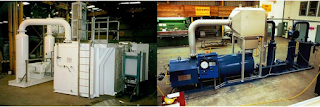
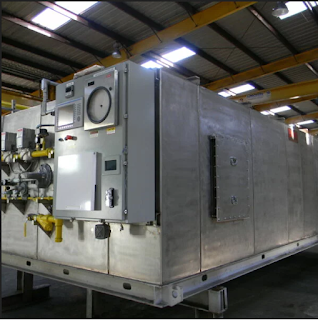
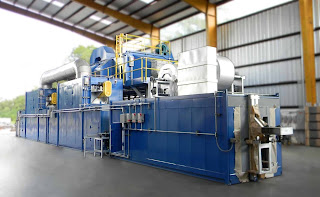
A common misconception is that you've seen one catalytic oxidizer for air pollution, you've seen them all.   The reality is these systems can vary greatly.  In most cases, a control system automatically unlocks the process, energizes the blowers, and purges the system with fresh air prior to igniting the burner and bringing the system up to its optimum operating temperature. Once heated, the air stream laden with VOCs enters the oxidizer's mixing chamber. It's best that a thorough mixing occurs to insure temperature uniformity. Certain basics do apply for all catalytic oxidizers. In general, the catalytic treatment of volatile organic compounds (VOCs) and other air pollutants,   happens over a customized precious metal catalyst bed withing the combustion chamber. During the oxidation process the harmful compounds are broken down to carbon dioxide, water vapor, and usable heat. These relatively harmless byproducts are often released into the atmosphere and the thermal e...

Epcon’s Technologies is the Bridge Success

Image
Epcon has been in the business of manufacturing, selling, and developing patented technologies relevant to recuperative thermal oxidizers and regenerative thermal oxidizers since 1977, long before Climate Change was widely accepted corporate agenda. But as environmental concerns within ESGs reporting have steadily been mounting, so have the efficiency of technologies our oxidizers and pollution abatement systems.   Our systems rely upon the concept of a chemical reaction – one involving organic hydrocarbons being processed. In this oxidation process, the volatile organic compounds and pollutants within the air stream – are broken down from their original constituents and reformed into new compounds. Heat and oxygen are used to breakdown the hydrocarbons, thus the term Thermal Oxidation. In deciding how to best apply one of our state-of-the-art Thermal Oxidizers into an existing industrial process, complex factors such as volumetric flow, volatile organic compound loading, and ...

Cashing in Carbon Credits with Thermal Oxidizers and RTOs

Image
Increasingly, Companies are pledging to help stop climate change by reducing their own greenhouse-gas emissions as much as they can. With the current Biden Administration heavily pushing the agenda of climate change, the role of greenhouse gases are being taken very seriously. While the discussions are often emotionally charged and filled with rhetoric, a number ofcritical data points stand out. Human activities, including combustion of fossil fuels, do lead to the production, or emission, of excess carbon dioxide. Beyond the obvious environmental benefits , re-engineering a cleaner manufacturing process could lead to some economic and social gains destined to change our world for the better. Perhaps most significant from an economic vantage – In many places a voluntary private sector market has developed which facilitates the purchase and sale of "carbon credits." The concept is simple, if elegant. Carbon dioxide emitters, less kindly called polluters, may choose to compe...

Epcon Industrial Systems - Protecting the Environment through Technology

Image
Epcon Industrial Systems, LP leads the way in the custom design and manufacture of regenerative thermal oxidizers , recuperative thermal oxidizers, afterburners, industrial furnaces, industrial ovens, and specialty finishing systems. Holding several patents inthe areas of air pollution control and heat processing, it is one of few related businesses with its own on-site manufacturing facility. Since its inception in 1977, Epcon has garnered great success both at home and abroad for its state-of-the-art thermal oxidizing systems, as well as, conveyor, batch, dry-off, and industrial ovens . From concept to completion, Epcon's technical team works together to design an efficient, customized product to suit each client’s unique needs Epcon can help achieve the goals of either new equipment or modernizing existing equipment for higher fuel efficiency, better performance, and compliance with the regulatory agencies. Go Green with Epcon: With a mission to “protect the environment ...

Afterburners & Thermal Oxidizers Explained

Image
Afterburners and Thermal oxidizers rely on the process of combustion to oxidize VOC’s to the hydrocarbon units of CO 2 and H 2 O.   High temperatures and residence time, coupled with the proper amount of turbulence, allow this process to occur. Generally, these processes will be able to destroy over 95% of the VOC’s in the process gas.   In order to increase the VOC destruction efficiency, higher temperatures and longer retention times are necessary.   When the destruction efficiencies are this high, the only products of this reaction are water and Carbon Dioxide.   These off-gases can be released to the atmosphere, so there are no removal costs.   Another unique property of these incineration type devices is the ability to destroy both small particulate VOC’s as well as airborne VOC’s.   By combining an incinerator with other methods of VOC removal such as scrubbers , baghouse filters and boilers, 99%+ removal efficiency can be guaranteed. In order ...

How Does Thermal Oxidizer Sizing Impact Melt System Capacity?

Image
Melt Furnace Capacities Historically, parts producers have focused on dryer and melt furnace capacities as the rate limiting factor when sizing their system. The practical reality, when sizing a system, is that vent stream emissions may be the real rate limiting factor controlling your overall recovery system’s capacity. One of the first steps when evaluating a potential metals recovery project should be to understand the expected fluids and contaminants in the feed-stock. Given these input conditions, a concurrent analysis of the thermal processing load for the drying system and the expected constituents in the vent stream can be conducted. From these calculations, an estimate of the projected emissions loading from the operation can be determined. Based on the findings from the above emissions calculations, the appropriate air pollution control system can be sized.   While thermal oxidation of these vents streams is a proven solution to mitigate the VOC emissions from ...

Thermal Deoiling Replaces Liquid Based Degreasing

Image
A major manufacturer of automobile air conditioners had been deoiling metal parts in a conveyorized solvent based vapor degreasing line, but the state environmental agency mandated that the line be shut down on a certain date due to the excessive water and air pollution it generated.   The facility uses aluminum parts of various geometry and weight in the fabrication of automobile air conditioner evaporators. The parts are formed in stamping machines in which oil is used as a drawing lubricant. Brazing of the parts is accomplished in a vacuum furnace that requires clean and dry parts to prevent failures of the brazed surfaces. The need for clean, dry parts in manufacturing processes is increasing because of increased emphases on quality and reliability.   At the same time, the costs of compliance with rules and regulations governing industrial hygiene, safety and the environment are forcing manufacturers to reevaluate cleaning methods. In aqueous cleaning and solvent bas...

A Detailed Account of Catalytic Oxidizers &Their Benefits

Image
  Thermal Oxidizers can be configured as either Regenerative Thermal Oxidizers (RTOs), Recuperative Thermal Oxidizers), or Direct Fired Thermal Oxidizers (DFTOs) and Catalytic Oxidizers. All of which utilize the same operating principle – Oxidization -- to destroy toxic Volatile Organic Compounds . All thermal oxidizers convert process exhaust stream VOCs into harmless amounts of carbon dioxide, water, and thermal energy that can be safely discharged to the atmosphere. A Catalytic Oxidizer is distinguished by a chemical reaction between the VOC hydrocarbon molecules and a precious-metal catalyst bed that is internal to the oxidizer system. How does it work? A catalyst is a substance used to accelerate the rate of a chemical reaction, allowing the oxidation process to occur at a much lower temperature. For example, a catalytic oxidizer operating 370 to 480 °C (700 to 900 °F) range can achieve the same efficiency as a thermal oxidizer operating between 700 and 820 °C (130...