Posts

Showing posts with the label heat exchangers

What goes on inside a Recuperative Thermal Oxidizer?

Image
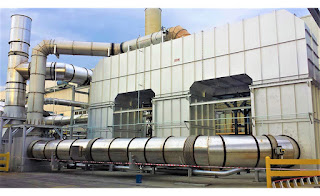
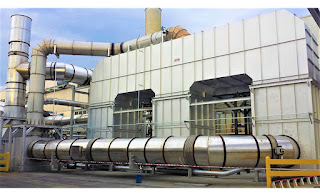
2,500 SCFM Recuperative Thermal Oxidizer . See inside this 2,500 SCFM Recuperative Thermal Oxidizer , designed, manufactured, tested and installed by Epcon. This animation demonstrates how the airflows pass through the shell and tube heat exchangers for maximum operating efficiencies. The Recuperative technology is suitable for low VOC (Volatile Organic Compound) concentrations and processes requiring 24-hour operation. These systems can achieve thermal efficiency up to 97% and have a DRE (destruction removal and efficiency) of 99%. Visit us for more information  https://epconlp.com/products/air-pollution-control/recuperative-thermal-oxidizers/

Coil Coating Line with Regenerative Thermal Oxidizer and Multistage Heat Recovery

Image
The Challenge A Coil Coating operation utilized an old direct-fired afterburner and a portion of the exhausts gas to heat a 100’ long curing oven, operating at line speeds up to 700ft/min The Solution Evaluating the appropriate oxidation system for a specific process stream is more challenging and requires in depth analysis of the specific process gas and operating parameters, as there are many configurations to choose from. A Direct Fired Afterburner, sometimes called an incinerator, is the most elementary system, as it contains no heat recovery system. Ideal for high VOC levels and fluctuating operating conditions. Thermal oxidizers are more sophisticated systems with a variety of heat recovery systems and configurations, typically used for larger process air flows.  Regenerative system, which uses media to absorb and transfer heat, was selected for this application.  In addition they are not steady-state, Instead they rely on a cycling gas, which flows ...

CHECK OUT OUR SUMMER NEWSLETTER

Image
See what's happening inside EPCON and get insights into the manufacturing industry. Get updates on our ongoing projects, upcoming events and our CEO's business outlook. https://mailchi.mp/epconlp/summer2024newsletter

ETTAC 's Final Presentation to the Department of Commerce

Image
Epcon's Managing Director, Tasha Jamaluddin, was proud to serve Honorable Secretary of Commerce, Gina Raimondo,  as Vice Chair of the 22-24 Environmental Technology Trade Advisory Committee (ETTAC). We are grateful for the opportunity to represent the air pollution sector to help increase our export competitiveness. Thank you for another successful Charter!  https://x.com/TradeGov/status/1813968615580049908

Excellence in Coil Coating Applications

Image
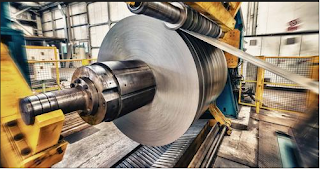
As leading supplier for the Coil Coating Industry for over 45 years, we at Epcon Industrial Systems are proud to continue leading the way in innovative solutions for pre-painting steel and aluminum substrates. Our state-of-the-art industrial systems have been the choice of the industry's top coil coaters, thanks to their efficiency and cost-effectiveness. At this year's recent NCCA (National Coil Coating Association’s) Annual Meeting, Our team had a chance to engage with the industry's leaders, reaffirming our commitment to excellence and innovation. Here's to many more years of partnership and success in the Coil Coating Industry! For more information on NCCA and the event visit: https://epconlp.com/industries_served/coil-coating/ #CoilCoating #IndustrialInnovation #EpconIndustrialSystems #SteelAndAluminumCoating

Visit Us at The TCEQ Environmental Conference

Image
Attendees from across the environmental sector will join TCEQ staff at the Austin Convention Center for learning and development opportunities. We welcome you to join us at the Trade Fair May 14th-15th.   Visit us at Booth 727 or contact us to set up a one on one meeting to learn more about what Epcon does to keep the state of Texas in environmental compliance! https://www.tceq.texas.gov/p2/events/etfc/etf.html

Thermal Curing: A Cornerstone of Composite Bonding and the Challenges of VOC Emissions

Image
Thermal curing, the process of hardening adhesives and sealants using heat, is a ubiquitous technique in numerous industrial and product manufacturing processes. In recent years, the composites industry has garnered increasing attention, particularly in the automotive and aerospace sectors. This surge in popularity stems from the desire to reduce vehicle and aircraft weight, thereby minimizing fuel consumption and greenhouse gas emissions. Composite materials , employed in these industries, must possess exceptional tensile strengths and load-bearing capabilities to withstand extreme temperatures and pressures. Three prominent composite bonding methods, each involving adhesive application – secondary bonding, co-bonding, and co- curing with the adhesive – predominantly differ in curing schedules. However, they all rely on heat-cure methods. In all cases, the adhesive composition must be meticulously designed to meet performance requirements under a wide range of conditions. This is why...

Improving Efficiency and Sustainability in Composites Bonding

Image
A new system comprising a curing oven, regenerative thermal oxidizer (RTO) , and secondary and tertiary heat exchangers can help reduce operating costs while ensuring the safe removal of volatile organic compounds during composite bonding processes. Among all chemical curing techniques, convection and radiant thermal curing represent the most widely used applications for adhesives and sealants . During the curing process, adhesives and sealants usually pass through two physical transformations—evaporation and condensation—while being applied to other materials. In addition to physical changes, the specific temperatures cause chemical changes in adhesives and sealants at a molecular level, where polymer chains’ crosslinking occurs. Crosslinking represents the final step of polymerization, which optimizes the tensile strength of the material and solidifies the adhesive bonds in the curing process. Achieving this critical threshold requires not only predetermined temperature ranges but...

Custom Coil Coating System Meets Production & VOC Removal Demands for Automotive Manufacturer

Image
Every manufacturing operation that produces finished painted metal products needs to assess the benefits of using pre-coated metal coils or applying paint directly on the finished product. Epcon Industrial Systems pursued a feasibility study for a large automotive manufacturer regarding its transition from the painting of metal parts on-site to the coating of coils used for various automobile parts. Both the coil coating process and the post-painting of automotive metal parts are notorious for high thermal requirements in coater rooms, in-house spray booths, curing ovens and volatile organic compound (VOC) removal. A re-engineered system with updated technology can not only increase the speed of the operations and output, but also improve the efficiency of the air pollution controls . This particular project objective was to design and assemble a new pre-painted metal production line equipped with a regenerative thermal oxidizer to remove the VOCs from the curing sessions. The client...

Various Heat-Treating Applications for the Aluminium Industry

Image
Heat treating is a critical thermal process for not only aluminum parts and products but also for the coating of aluminum sheets. Aluminum manufactured products of various sizes have been steadily replacing steel in industrial designs such as automobiles, airplanes, appliances and many more applications due to the light weight and flexibility of aluminum. Today, we are also seeing an increasing demand for affordable, lightweight, stamped metal parts, which is driving the development of specialty laminated products in coil-coating aluminum-sheet lines. Multiple Batch Aging Ovens with Guillotine Doors This article highlights two different heat-treating (annealing) systems designed for the aluminum industry. The first project features a batch-type aging oven designed for the manufacture of automotive parts. The second featured system is a curing oven with an integrated air-pollution-control system designed for coil coating laminated aluminum rolls. These systems illustrate the ch...

Methods to Increase Paint and Coating Application Process Efficiencies

Image
The industrial painting and coating of surfaces typically involves stages of heat treatment along with significant VOC emissions, which make the process well suited for an integrated “ oven /oxidizer combination” design with multi-stage heat recovery. By utilizing heat exchangers to transfer heat, it is possible to recover and recycle most of the thermal energy that would otherwise be wasted in the process, and potentially save millions in annual operating costs. A primary heat exchanger is used to pre-heat the process gas as it enters the air pollution control unit. These are typically in the form of regenerative and recuperative thermal oxidizers. From there, a secondary and even tertiary heat exchange system can be utilized to further recycle thermal energy. Within industrial paint and coating applications, the inclusion of multi-stage heat recovery between the ovens and oxidation process not only ensures emission compliance, but enhances thermal efficiency and overall system pe...