Posts

Showing posts with the label VOCs

Improving Efficiency and Sustainability in Composites Bonding
Image
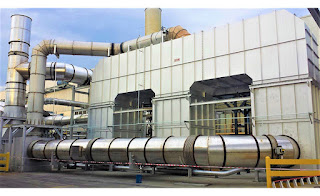
A new system comprising a curing oven, regenerative thermal oxidizer (RTO) , and secondary and tertiary heat exchangers can help reduce operating costs while ensuring the safe removal of volatile organic compounds during composite bonding processes. Among all chemical curing techniques, convection and radiant thermal curing represent the most widely used applications for adhesives and sealants . During the curing process, adhesives and sealants usually pass through two physical transformations—evaporation and condensation—while being applied to other materials. In addition to physical changes, the specific temperatures cause chemical changes in adhesives and sealants at a molecular level, where polymer chains’ crosslinking occurs. Crosslinking represents the final step of polymerization, which optimizes the tensile strength of the material and solidifies the adhesive bonds in the curing process. Achieving this critical threshold requires not only predetermined temperature ranges but...
Custom Coil Coating System Meets Production & VOC Removal Demands for Automotive Manufacturer

Image
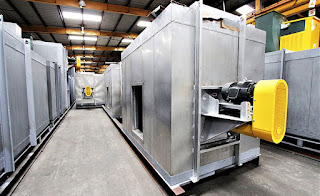
Every manufacturing operation that produces finished painted metal products needs to assess the benefits of using pre-coated metal coils or applying paint directly on the finished product. Epcon Industrial Systems pursued a feasibility study for a large automotive manufacturer regarding its transition from the painting of metal parts on-site to the coating of coils used for various automobile parts. Both the coil coating process and the post-painting of automotive metal parts are notorious for high thermal requirements in coater rooms, in-house spray booths, curing ovens and volatile organic compound (VOC) removal. A re-engineered system with updated technology can not only increase the speed of the operations and output, but also improve the efficiency of the air pollution controls . This particular project objective was to design and assemble a new pre-painted metal production line equipped with a regenerative thermal oxidizer to remove the VOCs from the curing sessions. The client...

Achieving Net-Positive Operations in Adhesive Tape Manufacturing

Image
An air pollution control system designed and installed for a major tape coating line exemplifies how the best economic solution can also be the best environmental solution. As manufacturers in the adhesives sector increasingly champion their roles as environmental stewards, their focus extends beyond the monetary benefits of immediate operations such as a reduced downtime, fuel cost, and waste disposal fees. Instead, the currency of environmental , social, and governance (ESG) factors comes to the forefront, and the lasting environmental impacts that manufacturers’ decisions will have for generations become of equal or even greater importance. As more manufacturers across the adhesives and sealants industry embrace sustainable manufacturing processes, they are finding their decisions are also improving their financial bottom line. There does not need to be a trade-off, and green manufacturing is proving to be a win-win.  Tape Manufacturing Challenge A large manufacturer of ...

Sophisticated Control Systems for Optimal Process Operations

Image
Whether installing new equipment or retrofitting an existing facility, make sure the industrial systems use the latest in controls technology and with the capacity to meet a range of variable operational demands while limiting operator oversight. A comprehensive control system, whether designing a new controls package or updating your existing system to a new controls scheme, is the most effective way to enhance any complex industrial manufacturing process — especially in more sensitive applications, such as coil coating or composite curing, where uniformity and precision are critical and when errors in operating controls are detrimental and extremely costly. The importance of controls is compounded when you have an integrated system where the process heating equipment is connected to an air pollution control system. These complex and expansive projects require sophisticated controls that regulate process speeds, temperature ranges, airflows, pressure, and VOC concentration levels, c...

Cashing in Carbon Credits with Thermal Oxidizers and RTOs

Image
Increasingly, Companies are pledging to help stop climate change by reducing their own greenhouse-gas emissions as much as they can. With the current Biden Administration heavily pushing the agenda of climate change, the role of greenhouse gases are being taken very seriously. While the discussions are often emotionally charged and filled with rhetoric, a number ofcritical data points stand out. Human activities, including combustion of fossil fuels, do lead to the production, or emission, of excess carbon dioxide. Beyond the obvious environmental benefits , re-engineering a cleaner manufacturing process could lead to some economic and social gains destined to change our world for the better. Perhaps most significant from an economic vantage – In many places a voluntary private sector market has developed which facilitates the purchase and sale of "carbon credits." The concept is simple, if elegant. Carbon dioxide emitters, less kindly called polluters, may choose to compe...

A Detailed Account of Catalytic Oxidizers &Their Benefits

Image
  Thermal Oxidizers can be configured as either Regenerative Thermal Oxidizers (RTOs), Recuperative Thermal Oxidizers), or Direct Fired Thermal Oxidizers (DFTOs) and Catalytic Oxidizers. All of which utilize the same operating principle – Oxidization -- to destroy toxic Volatile Organic Compounds . All thermal oxidizers convert process exhaust stream VOCs into harmless amounts of carbon dioxide, water, and thermal energy that can be safely discharged to the atmosphere. A Catalytic Oxidizer is distinguished by a chemical reaction between the VOC hydrocarbon molecules and a precious-metal catalyst bed that is internal to the oxidizer system. How does it work? A catalyst is a substance used to accelerate the rate of a chemical reaction, allowing the oxidation process to occur at a much lower temperature. For example, a catalytic oxidizer operating 370 to 480 °C (700 to 900 °F) range can achieve the same efficiency as a thermal oxidizer operating between 700 and 820 °C (130...