Posts

Showing posts with the label thermal oxidizers

5 Qualities to Look for in Excellent Thermal Oxidizer Manufacturers

Image
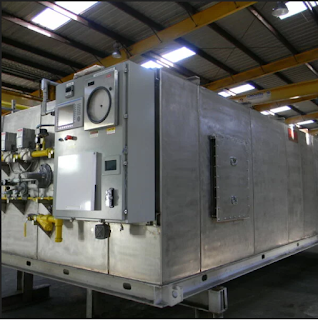
Thermal oxidizers are complex, technical products that many companies depend on to keep their businesses running and in compliance with environmental regulations. But what qualities should you be looking for when selecting an excellent thermal oxidizer manufacturer? Here are some factors to consider: 1 – Industry Specific Knowledge Thermal oxidizers are a mainstay in many different industries. This includes energy production, oil and natural gas production, chemical, pharmaceutical, and many types of industrial manufacturing just to name a few. Each industry has its own set of unique challenges and guidelines and standards that need to be followed. An excellent  thermal oxidizer manufacturer  should have in-depth knowledge of, and practical hands-on experience working on projects within your industry. 2 – Dedicated Engineering Staff Engineering is the most important component of a solid thermal oxidizer manufacturer. Without excellent  chemical and mechanical en...

Overview of Catalytic Recuperative Oxidizer

Image
Epcon’s Catalytic Oxidizers destroy toxic Volatile Organic Compounds (VOCs) that are discharged in industrial process exhausts. The catalytic reactor achieves destruction of the organics by the process of oxidation. The catalyst oxidizes the hydrocarbons to carbon dioxide and water vapor at significantly lower temperatures than thermal oxidizers . How the Catalytic Recuperative Oxidizer Works? The Catalytic Oxidizer is designed based on volume of airflow, organic vapor concentrations and desired destruction efficiency. During operation, VOC-laden air is drawn into the system fan and is discharged into the system's heat exchanger. The air is preheated through the tube side of the heat exchanger and then passes the burner, where the contaminated air is raised to the operating temperature. As the VOC-laden air passes through the catalyst, an exothermicreaction takes place as the VOCs are converted to carbon dioxide and water vapor. The hot, purified air then passes on the shell si...

Afterburners & Thermal Oxidizers Explained

Image
Afterburners and Thermal oxidizers rely on the process of combustion to oxidize VOC’s to the hydrocarbon units of CO 2 and H 2 O.   High temperatures and residence time, coupled with the proper amount of turbulence, allow this process to occur. Generally, these processes will be able to destroy over 95% of the VOC’s in the process gas.   In order to increase the VOC destruction efficiency, higher temperatures and longer retention times are necessary.   When the destruction efficiencies are this high, the only products of this reaction are water and Carbon Dioxide.   These off-gases can be released to the atmosphere, so there are no removal costs.   Another unique property of these incineration type devices is the ability to destroy both small particulate VOC’s as well as airborne VOC’s.   By combining an incinerator with other methods of VOC removal such as scrubbers , baghouse filters and boilers, 99%+ removal efficiency can be guaranteed. In order ...

How Does Thermal Oxidizer Sizing Impact Melt System Capacity?

Image
Melt Furnace Capacities Historically, parts producers have focused on dryer and melt furnace capacities as the rate limiting factor when sizing their system. The practical reality, when sizing a system, is that vent stream emissions may be the real rate limiting factor controlling your overall recovery system’s capacity. One of the first steps when evaluating a potential metals recovery project should be to understand the expected fluids and contaminants in the feed-stock. Given these input conditions, a concurrent analysis of the thermal processing load for the drying system and the expected constituents in the vent stream can be conducted. From these calculations, an estimate of the projected emissions loading from the operation can be determined. Based on the findings from the above emissions calculations, the appropriate air pollution control system can be sized.   While thermal oxidation of these vents streams is a proven solution to mitigate the VOC emissions from ...

What is a Regenerative Thermal Oxidizer and how does it work?

Image
Regenerative thermal oxidizers are used in various industries to destroy the volatile organic compounds or VOC s that are produced in the factories. These VOCs have serious negative impacts on human health and the environment. This is why regulatory compliance often calls for thermal oxidizers to cut down on the pollution they produce and keep it below the DRE emission levels. At Epcon , we have created top-quality RTO systems that offer high VOC destruction, up to 99.99%. How does a Regenerative thermal oxidizer system work? An RTO system is a highly energy-efficient mechanism that is able to achieve a high level of VOC destruction. It uses the process of regeneration to recover the internal heat, with 2-3 energy recovery chambers in the system, which are lined with ceramic heat recovery media. The chambers function under a ‘swing bed’ absorption principle. This principle uses flow reversal by transferring the heat through multiple beds. The polluted exhaust stream goes through...